 guides
Cooking Indian with Japanese supermarket vegetables
Komatsuna for saag, kabocha for kaddu, daikon for mooli paratha. Seven everyday Japanese vegetables that cook beautifully the Indian way, and the spices that make them work.

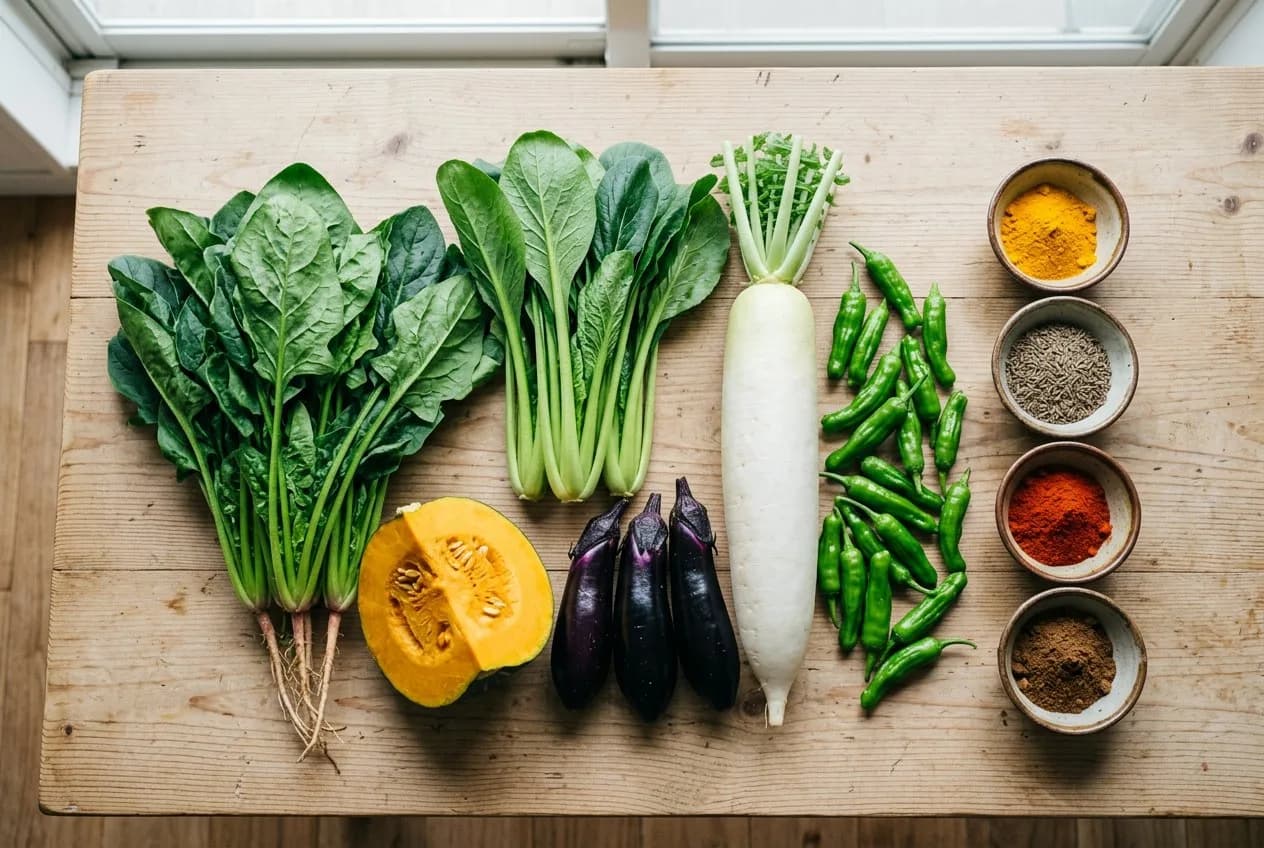
You do not need an Indian vegetable shop to cook Indian food in Japan. Many vegetables at the local スーパー are close relatives of what we cook at home, and some are even better. Here are seven we use all the time.
Seven easy swaps
Hōrensō and komatsuna for palak and saag
Japanese spinach is milder than Indian palak; mix in a few komatsuna leaves for a deeper, slightly peppery taste. Try it in our palak paneer.
Kabocha for kaddu
Kabocha is sweeter and denser than Indian pumpkin, which makes a wonderful khatta-meetha kaddu. Temper methi seeds in mustard oil, add the cubed kabocha and finish with amchur and a little jaggery.
Nasu for baingan
Japanese eggplants are thin-skinned and cook quickly. Grill them whole over the gas flame for baingan bharta, or slice for a quick stir-fry with kitchen king masala.
Daikon for mooli
Grate daikon, squeeze out the water, and mix with chilli, coriander and ajwain for mooli parathas made with atta. Keep the squeezed water for the dough.
Okura for bhindi
Japanese okra is small and tender. Wash and dry it completely before cutting so it does not turn slimy, then dry-fry with onions, coriander powder and amchur.
Shishitō for mirchi
Mild shishitō peppers make lovely mirchi pakoras in a besan batter, or a quick stuffed mirchi with a peanut masala.
Satoimo for arbi
Japanese taro is the same plant as Indian arbi. Boil, peel, flatten slightly and shallow-fry with ajwain, chilli and amchur until crisp.
The rule of thumb: Japanese vegetables tend to be sweeter and more tender. Cook them for less time, and balance the sweetness with something sour, such as amchur, lemon or tamarind.