 guides
Your first Indian pantry in Japan: 12 essentials to start with
Just moved to Japan, or cooking Indian food at home for the first time? These twelve staples cover most everyday dals, sabzis and curries, and they all keep for months.

A Japanese kitchen is small, and Indian cooking can look like it needs fifty jars. It does not. With the twelve items below you can cook most of what an Indian family eats on an ordinary weekday, and add the rest one recipe at a time.
Lentils, rice and flour
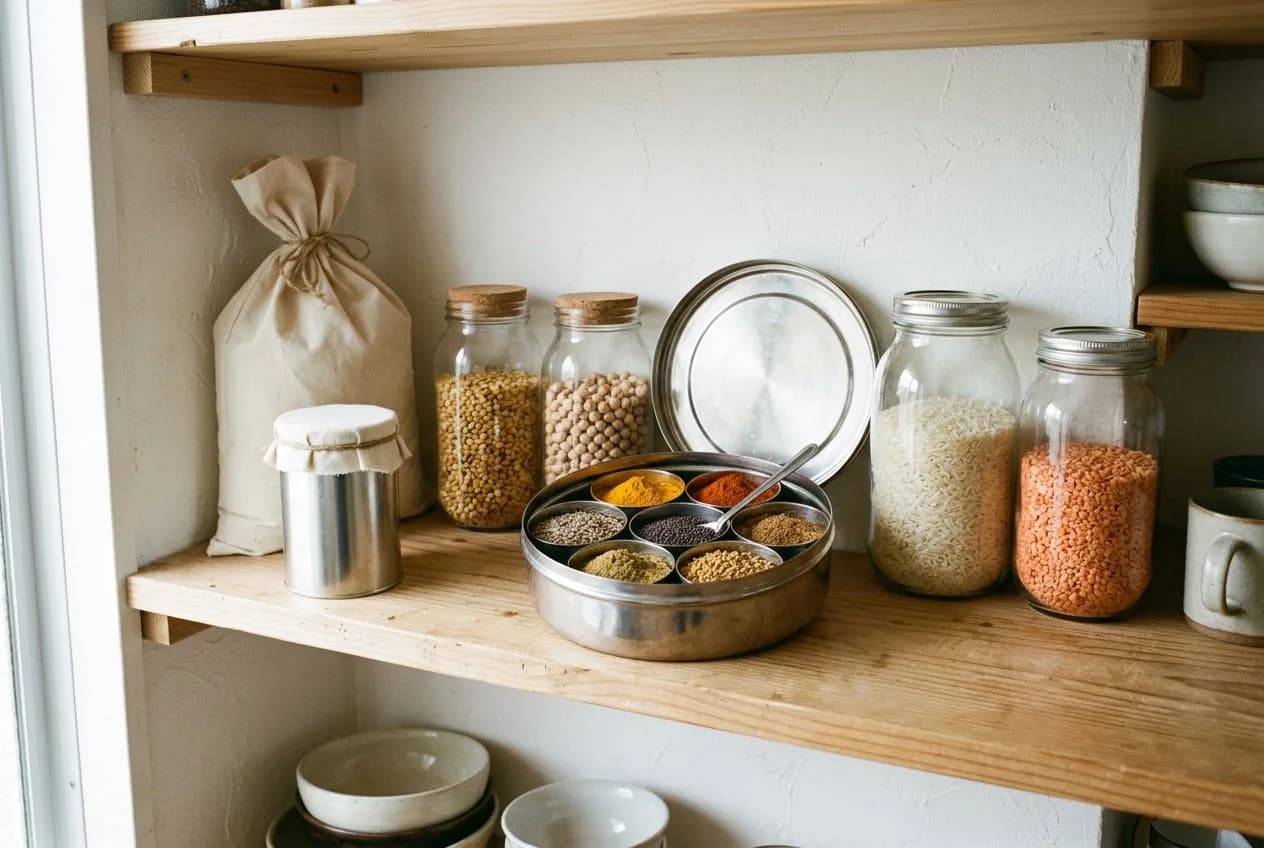
- Toor dal: the everyday yellow dal. Start with our dal tadka.
- Masoor dal (red lentils): cooks in 15 minutes without soaking, perfect for weeknights.
- Kabuli chana: for chana masala, salads and chaat.
- Basmati rice: Japanese rice is lovely, but it is sticky by design; basmati gives the separate grains pulao and biryani need.
- Whole wheat atta: for rotis and parathas. Japanese 強力粉 makes chewier, paler rotis.
The masala dabba
A round steel spice box (masala dabba) holds the six or seven spices you reach for daily. Fill it with these:
- Turmeric: a little goes into almost every dal and sabzi.
- Kashmiri chilli powder: bright red colour with gentle heat; good if your household includes Japanese friends who like it mild.
- Cumin seeds and mustard seeds: the base of north and south Indian tempering.
- Coriander powder: body and earthiness for gravies.
- Garam masala: a finishing spice, added at the end.
- Hing (asafoetida): a tiny pinch gives dal its savoury depth.
Fat and flavour
- Ghee: for tadka, rotis and sweets. It keeps for months without refrigeration.
Two shortcuts worth having: ginger-garlic paste saves ten minutes on every curry, and kasoori methi makes restaurant-style gravies taste right.
What to buy locally
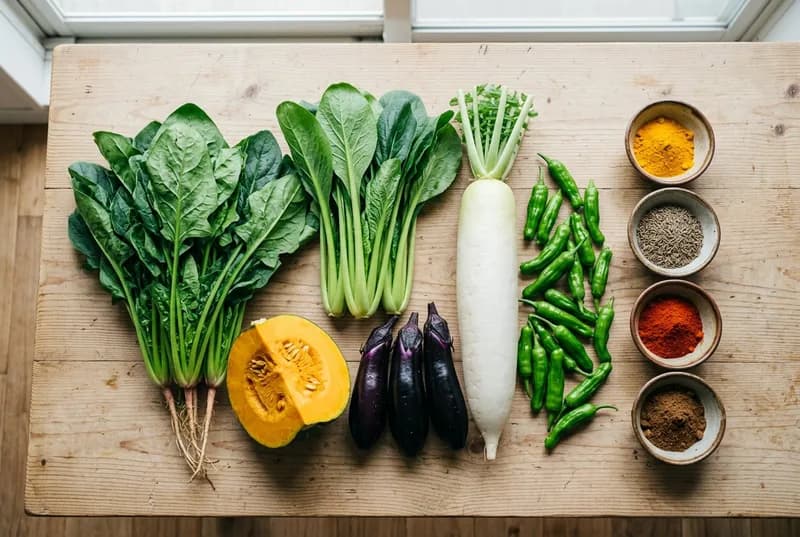
Onions, tomatoes, potatoes, ginger, garlic, lemons, coriander (パクチー) and yoghurt are all easy to find in Japanese supermarkets. See our guide to cooking Indian with Japanese vegetables for what else works.